
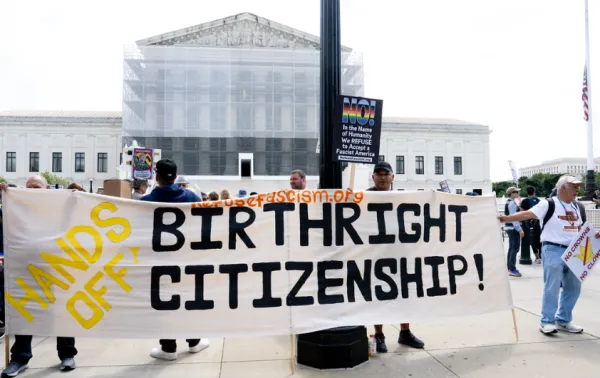
Photo by Victoria Pickering
As the US Supreme Court ends this term and releases a torrent of decisions before taking off on its European vacation from July through August, I kept looking for the long-awaited decision on the constitutionality of Trump’s executive order on birthright citizenship. A torrent of decisions was released yesterday. The majority refused to void $5 million judgement against Trump for sexual abuse, allowed him more discretion in firing federal appointees, blocked his firing of a Federal Reserve member, allowed a grace period in Mississippi for receiving mail ballots, and blocked geofencing in a win for privacy.
Nothing on birthright citizenship yet, which is now expected on the last day of June.
I kept digging online to try to get a handle on the impacts of this decision. A year ago, the justices simply punted on the whole issue, or nearly did so, leaving everything up in the air and a potentially tragic mess. Essentially, they didn’t rule on the issue at all. Instead, the majority said that one federal judge didn’t have right to issue a nationwide injunction blocking the executive order, and instead they suggested that the matter needed to be litigated potentially as a class action lawsuit. Then in another likely compromise between the hyper-conservative majority and the slim liberal minority, they allowed 30-days before allowing Trump’s ban to go into effect. To their credit, a number of law firms immediately filed such suits after the decision, so props to them.
That’s where we stand, but why? For all the claims by the conservatives about “originality,” the US Constitution is clear. If you are born here, you are a citizen. Yes, that’s not true in every country around the world, but is largely true in North and Latin America. Ironically, for the conservatives and Trump, when did they start caring about what other countries do or don’t do?
Ending birthright citizenship couldn’t be retroactive. At least it shouldn’t be. There is a constitutional bar on ex post facto laws, essentially laws passed after the fact. You can’t retroactively punish someone for a law passed later. Going forward, sorting out babies would just be chaos. If born to undocumented parents, perhaps they would have the citizenship of their parents, but that would depend on the rules of their home country. This so-called “derivative citizenship” is recognized by some countries like Mexico, Brazil, and Poland, but not everyone. Some babies could be stateless and outside of the system, any benefits, a passport, and more. These babies would be like many Palestinians.
All we can do now is wait in hopes that the Supreme Court will do right. The odds aren’t great, no matter how clear the law.